How to Clean Wheels Without Scratching: Flat or Round Wheel Brush?
Wheels collect the most grime and scratch easily. We show you how to clean them safely step by step and how to choose a flat or round wheel brush to suit the shape of your wheels.
9 min read
Why wheels scratch so easily during washing
Wheels are usually the dirtiest part of any car. Brake dust, road mud, winter salt, and fine grit settle on them year-round. This grime is sharp and clings stubbornly to the surface, especially in hard-to-reach recesses between spokes and around the wheel hub.
Scratches on wheels rarely come from the dirt alone. They happen when you drag that grit across the surface using a dry sponge, a stiff brush, or a tool still holding abrasive particles from a previous wash. On top of that, hard brush handles can easily strike the wheel rim when you try to reach deep inside.
The shape of your tool is just as important. When a brush does not fit between spokes, it is tempting to force it or reach in with bare fingers. That is precisely when wheel scratches and scraped knuckles happen.
Most of these marks can easily be avoided. All it takes is a few simple rules and a soft wheel brush matched to the design of your wheels. In this guide, we will walk you through the entire wash process and help you choose between a flat and a round wheel brush.
Before you start: cool wheels and clean tools
Rule number one: only wash cool wheels. After driving, wheels and brakes can be scorching hot. Water and cleaning chemicals dry quickly on hot metal, leaving water spots and streaks, and brushes should never touch hot surfaces. Wait until the wheels have cooled down completely. If a wheel still feels warm to the touch, give it a few more minutes.
Pick a shaded spot and get everything ready before turning on the water:
- a dedicated bucket of water and car shampoo,
- a dedicated wheel cleaner, if you use one,
- a soft-bristled wheel brush,
- a clean microfiber car drying towel,
- a garden hose or pressure washer for rinsing.
A dedicated bucket and separate tools for wheels are a straightforward way to keep heavy wheel grime from transferring onto your paint. For the same reason, wheels are usually cleaned first, before the bodywork. If you use a specialised wheel cleaner, read the label beforehand to ensure it is safe for your wheel finish.
Finally, inspect the brush bristles. If you spot trapped sand or tiny pebbles, rinse them out thoroughly before starting. It takes just a few seconds, but it is precisely those trapped particles that leave nasty scratches on your wheels.
How to clean wheels step by step
Once your wheels are cool and your tools are ready, wash one wheel at a time. This prevents your cleaning chemicals from drying out before you can rinse them away.
- Rinse away loose grit. A strong stream of water will wash off surface sand and mud before your brush ever touches the wheel. Make sure to rinse between the spokes and inside the wheel arch too.
- Apply your cleaner. Use car shampoo from your bucket or spray on a wheel cleaner, following the instructions on the label. Never allow it to dry on the surface.
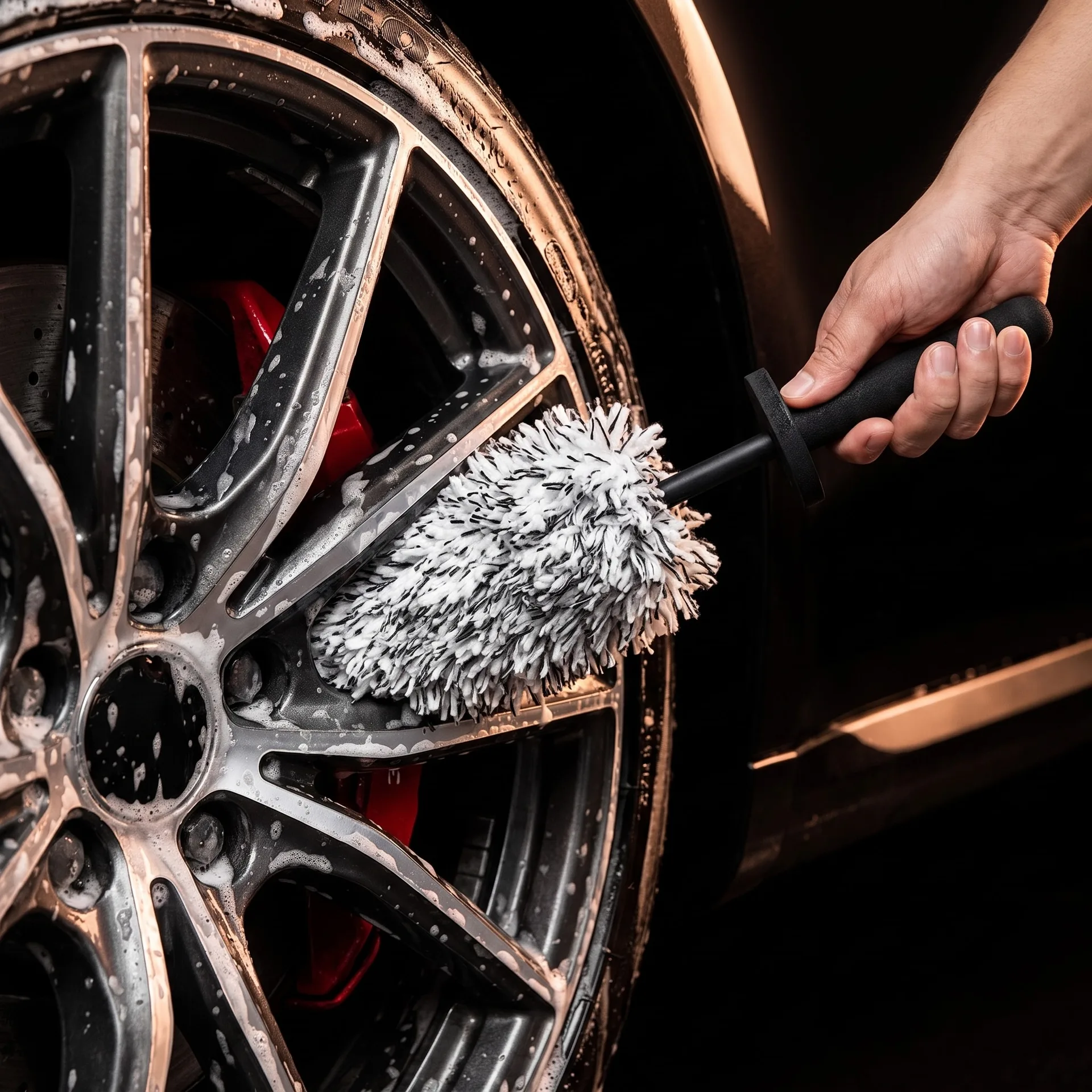
- Wash wet and without pressure. Dip your wheel brush into the shampoo solution and glide it gently over the wheel: front face, gaps between spokes, the inner barrel, and behind the brake caliper. Let the bristles and cleaner do the hard work. Scrubbing hard will not speed things up; it only increases the risk of scratching.
- Rinse your brush as you go. Dunk and swish the brush in your bucket every few passes so you do not rub collected dirt back onto the wheel.
- Rinse the wheel thoroughly. Wash away all remaining foam and cleaner residues, paying special attention to tight corners.
- Dry the wheel. Soak up residual water with a soft towel to prevent unsightly water spots.
The heaviest brake dust and dirt usually accumulate around wheel bolts, the valve stem, and inside the barrel. Spend a little extra time on these spots, but always work gently without brute force.
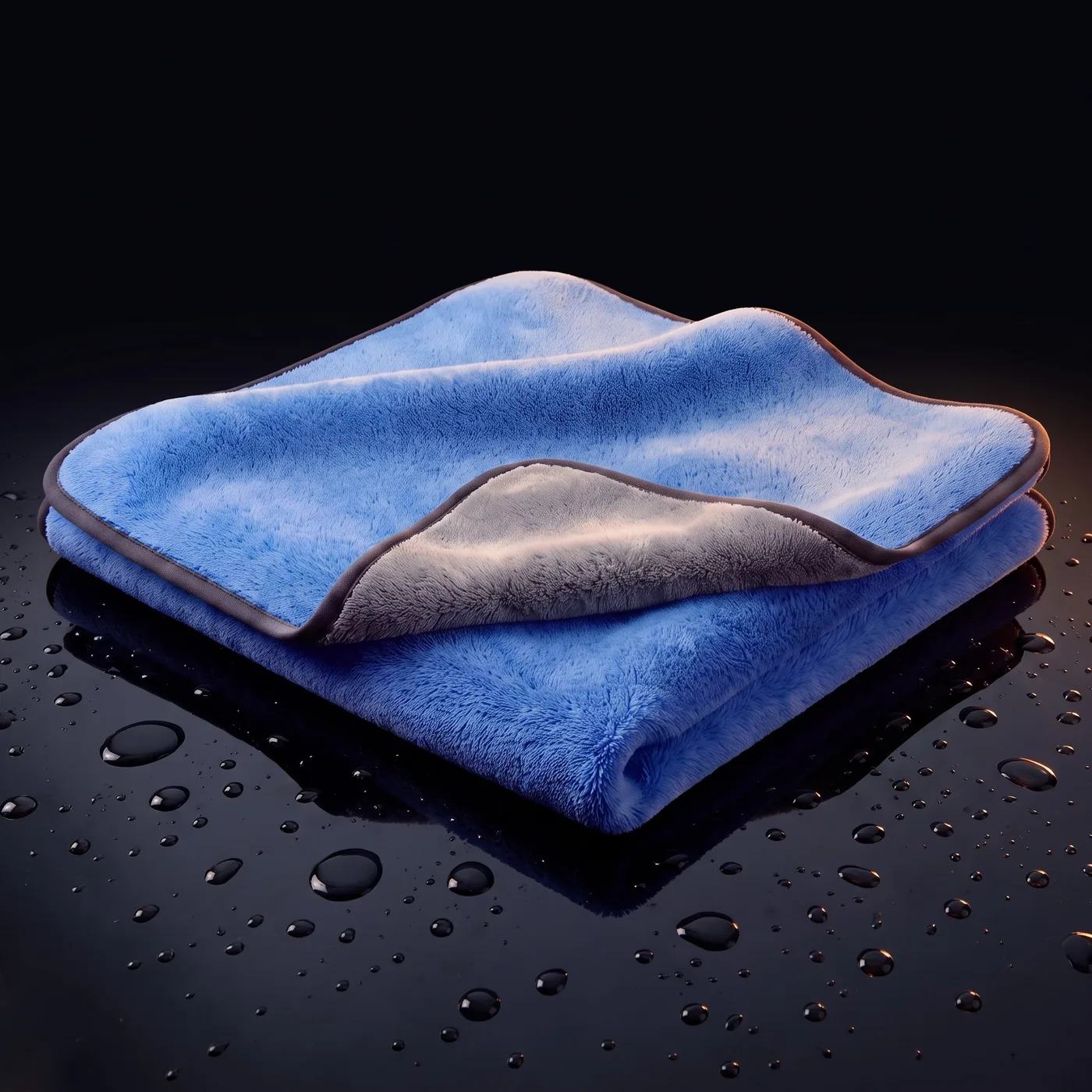
For drying wheels, our handy microfiber car drying towel 40 × 40 cm, 800 g/m² is ideal. It features a dual-sided design: blue for drying and grey for buffing. We recommend keeping one towel reserved exclusively for wheels.
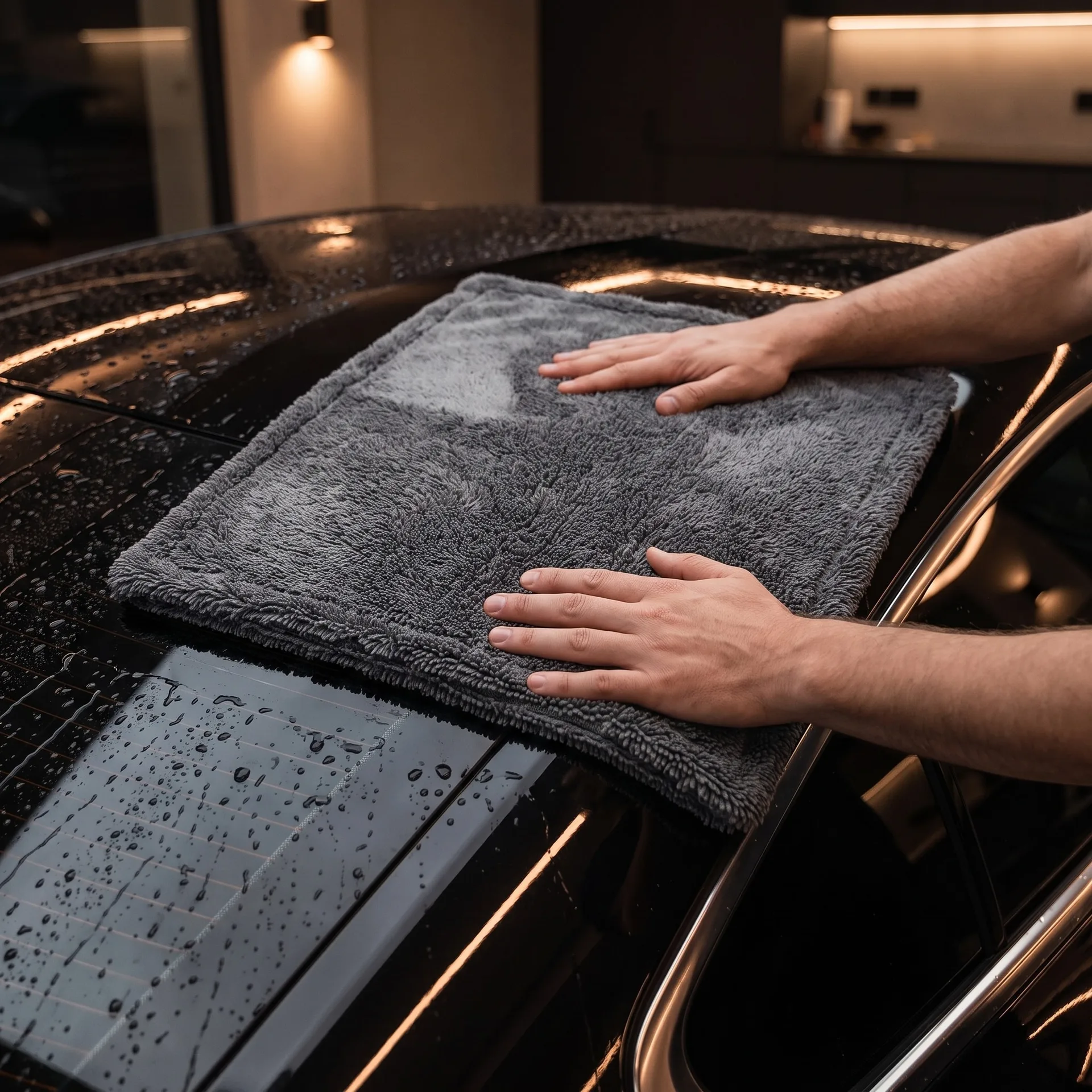
If you are drying the entire car after doing the wheels, reach for our larger XL drying towel 70 × 90 cm. Find out how to dry your vehicle efficiently in our guide on how to dry your car without streaks.
Flat vs round wheel brush: what is the difference?
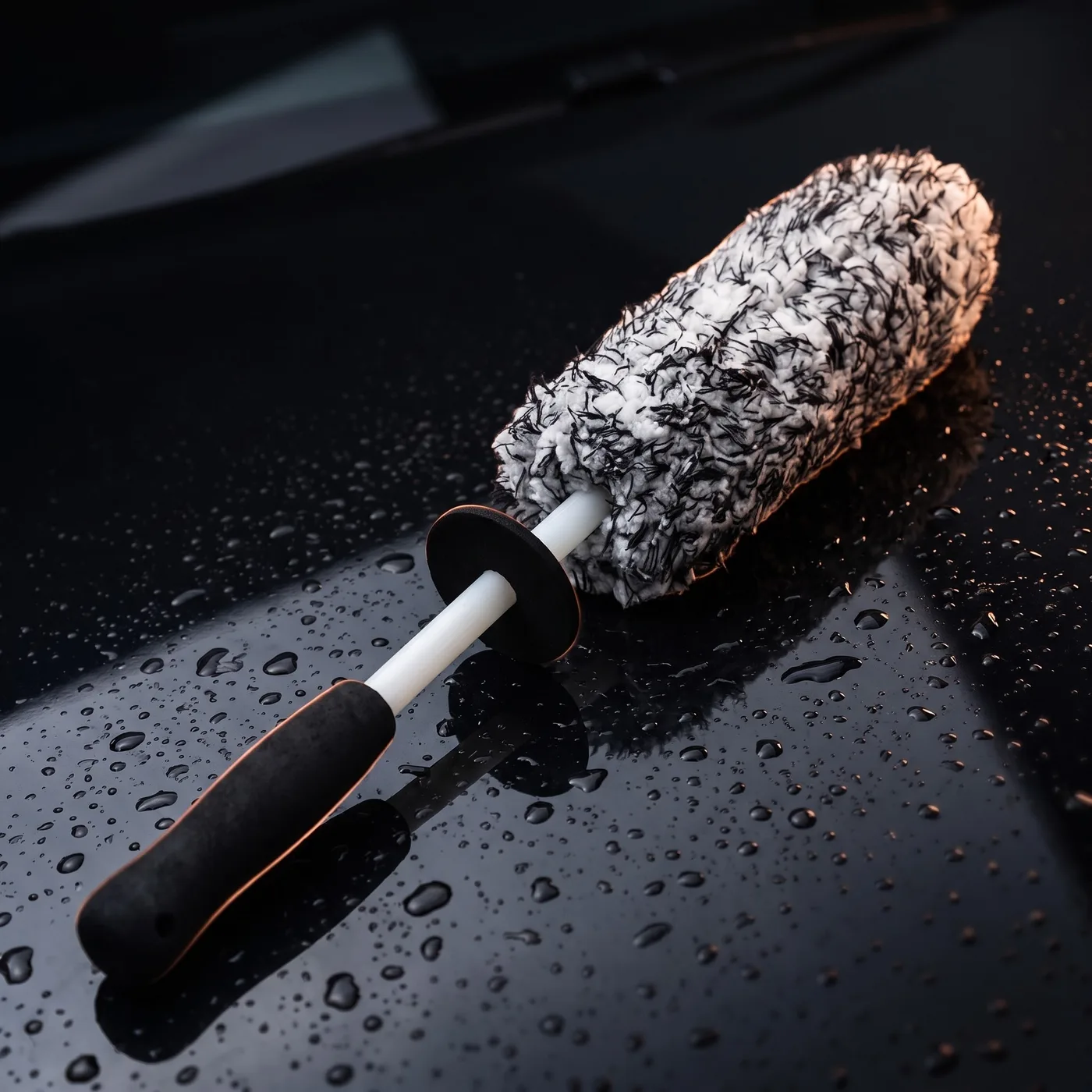
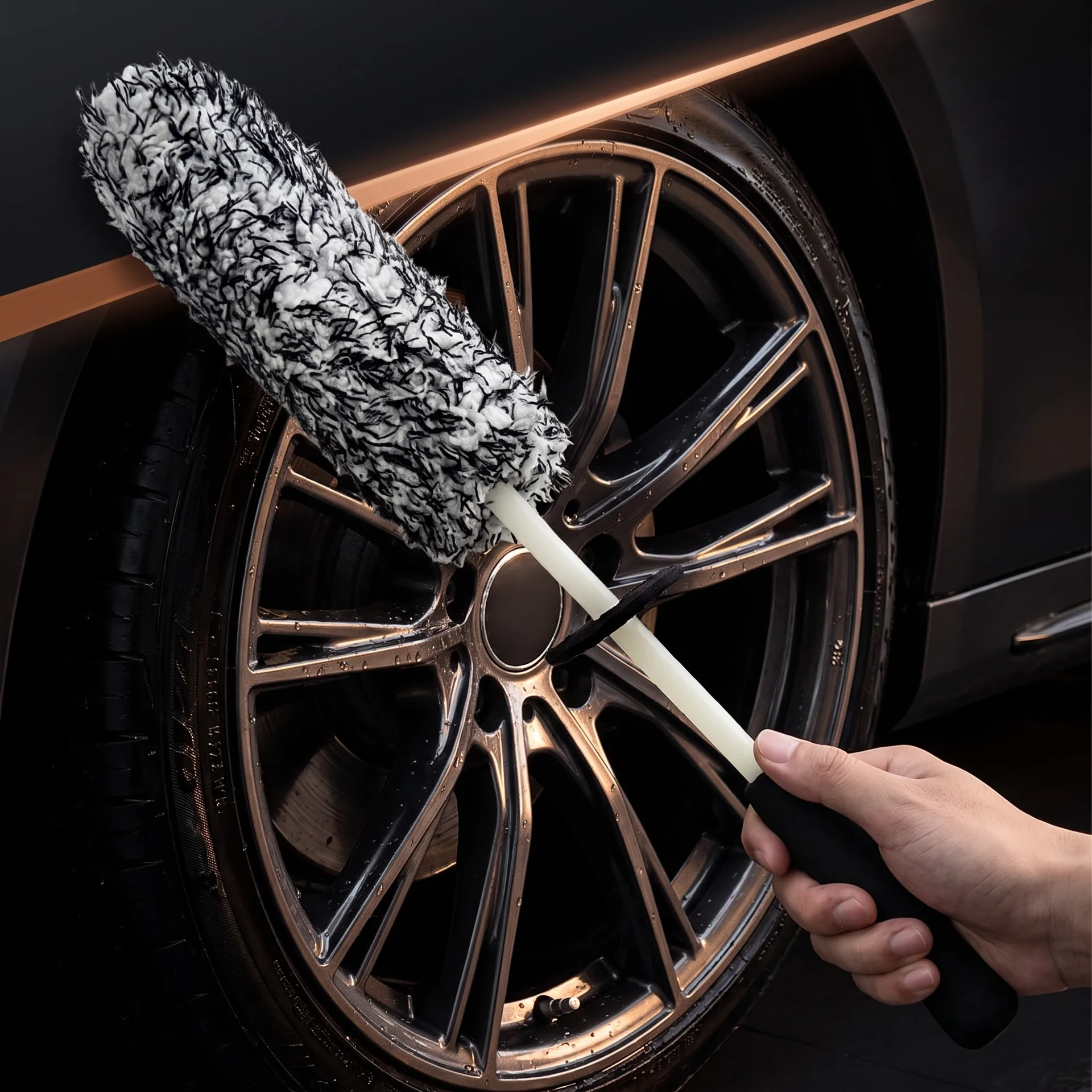
Our two wheel brushes have plenty in common. Both feature dense, ultra-soft, black-and-white microfiber made from 100% polyester. Both are designed exclusively for wet use with car shampoo or wheel cleaner. Both also include a knuckle guard on the handle that protects your hands from the wheel rim and guards the wheel against accidental knocks from hard plastic parts. They differ in head shape, which determines where each can reach.
Flat wheel brush
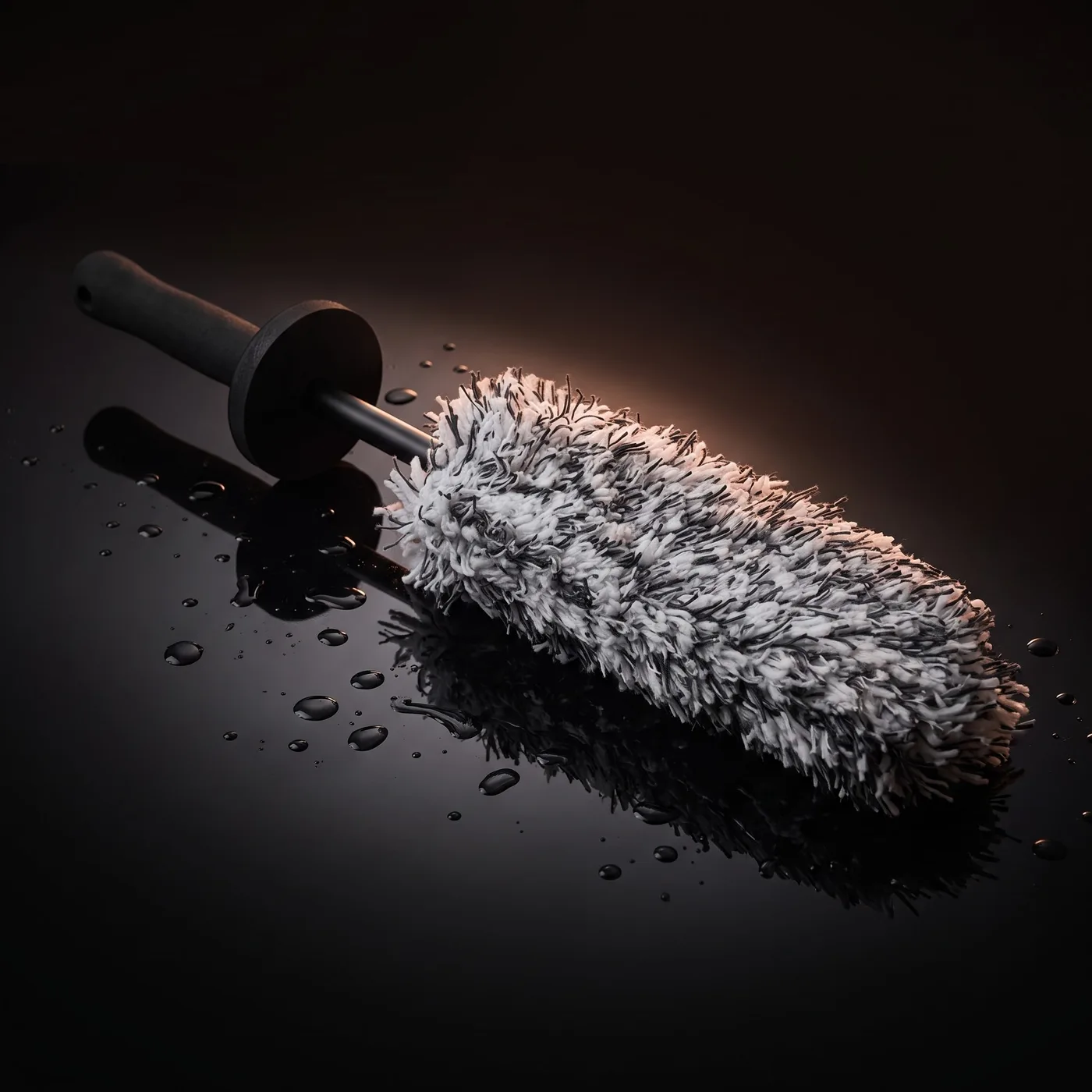
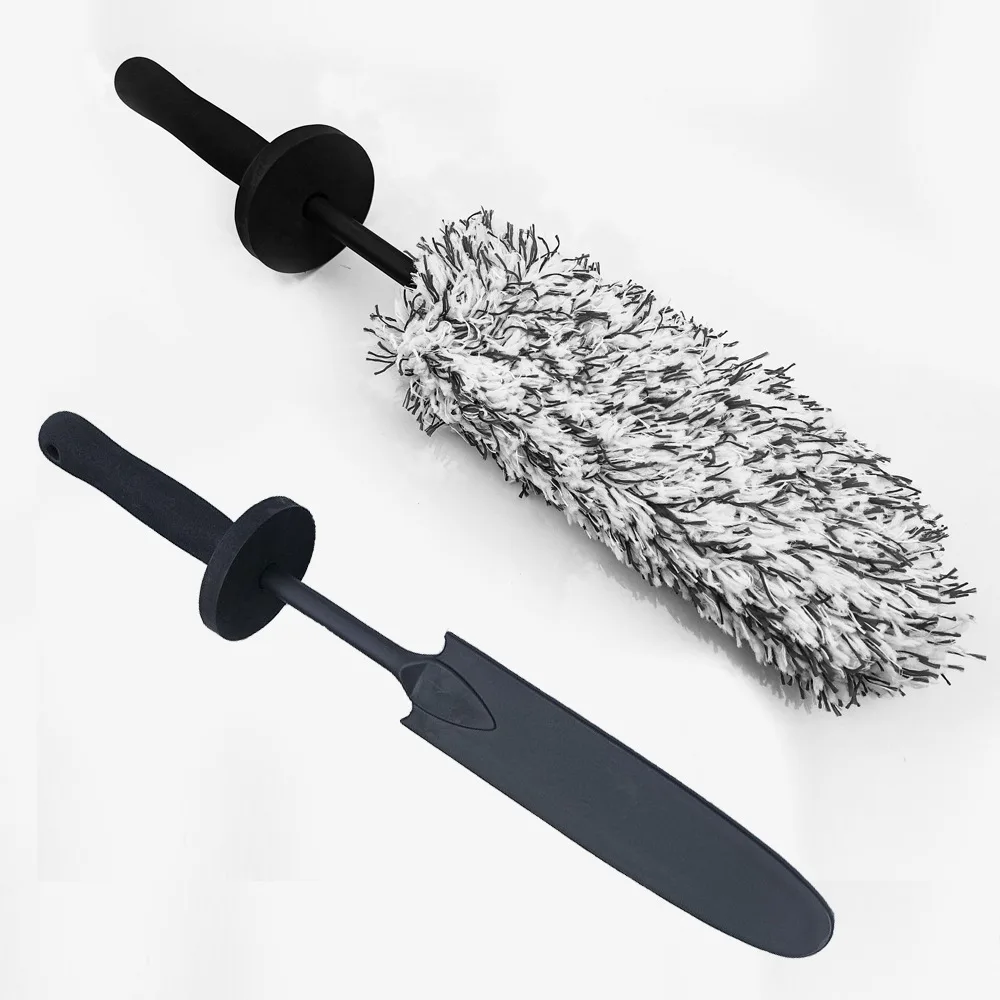
The flat wheel brush has a flat, paddle-shaped plastic core inside, fitted with a soft microfiber sleeve. This slim, flattened profile easily slides into narrow gaps between spokes and into the tight space behind the brake caliper. It is the go-to wheel brush for tight clearances that standard brushes simply cannot reach.
Round wheel brush
The round wheel brush features a cylindrical head of plush microfiber. It reaches deep into the wheel barrel through wider spoke openings, thoroughly cleaning the inner barrel and around the brake caliper. When the gaps between the spokes are wide, the round head easily reaches where your hand cannot.
The microfiber on both brushes is gentle and safe for wheels as well as paint. The same golden rules still apply: always work wet, keep bristles clean, and glide smoothly without applying excessive force.
Which wheel brush should you choose for your wheels?
The easiest way to decide is to look closely at your own wheels. Pay attention to how closely spaced the spokes are and how much room is left between the spokes and the brake caliper.
- Dense, intricate multi-spoke wheels (lots of slim spokes, tight gaps) - choose the flat wheel brush. Its slim profile slips right where a round brush cannot fit.
- Wide spoke clearances (fewer, thicker spokes with lots of open space) - choose the round wheel brush. Its cylindrical head reaches right through to clean deep inner barrels.
- Tight clearance behind the brake caliper - reach for the flat wheel brush; its slim profile slides effortlessly into tight gaps.
- Two sets of wheels or multiple cars at home - you may have different wheel designs, making both brushes useful.
You can also use both brushes together as a complete set. Use the round brush for deeper, open sections of the wheel barrel, and follow up with the flat brush for narrow gaps and behind the brake caliper. Having both is also handy when your summer and winter wheels feature completely different designs.
If you are still unsure, take a close look at your wheels and assess the gap sizes between spokes. If tight slots outnumber open spaces, start with the flat wheel brush.
How to care for your wheel brush after washing
A wheel brush left to dry dirty will simply spread trapped grime across your wheels during the next wash. Cleaning it takes just a minute and makes a huge difference.
- When you finish washing, rinse the wheel brush thoroughly with clean water. Remove all remaining dirt, shampoo, and wheel cleaner residue.
- Leave it to air dry naturally with the bristles facing upwards.
- Store it in a dry place, away from open flames and direct heat sources.
Never put wheel brushes in the washing machine. A thorough rinse under clean running water is all they need. Before your next wash, inspect the bristles once again. If you see trapped grit or small stones, rinse them out before the brush touches a wheel.
Always wash your wheel drying towel before using it for the first time. Wash it separately from other fabrics at 30-40°C, using a dedicated microfiber detergent or mild liquid soap. Avoid washing powders, bleach, and fabric softeners, as these clog microfiber strands. Hang it to air dry; do not tumble dry or iron.
Summary: safe wheel cleaning in a few easy steps
Safe wheel cleaning comes down to a few good habits. Only clean cool wheels, always rinse off loose grit first, work wet with car shampoo or wheel cleaner, and never press hard with your wheel brush. Check the bristles before every wash, and always rinse your brush afterwards and store it bristles up to dry.
The best brush depends on your wheel design. A flat wheel brush gets into tight gaps and behind the brake caliper, while a round wheel brush reaches deep into the barrel through wide gaps between the spokes. If you run different sets of wheels or want to clean every single corner with ease, grab both.
Cleaning wheels is just one step. To put together a complete home detailing routine, check out our guide on how to care for your car at home. Whenever you need to top up your detailing gear, find our full range in the products section.
Frequently Asked Questions
No. After driving, wheels and brakes can be very hot, causing water and chemicals to dry rapidly on them. Wait until the wheels have cooled down completely before you start cleaning.
No. Our wheel brushes are designed exclusively for wet use, with car shampoo or a dedicated wheel cleaner. Always rinse loose dirt off the wheel before cleaning as well.
The flat brush has a flat plastic core with a microfiber cover, allowing it to slip into tight gaps and behind the brake caliper. The round brush has a cylindrical head that reaches deep into the wheel barrel through wider openings.
No. After cleaning, simply rinse it thoroughly with clean water and leave it to air dry, bristles facing up.
Check the bristles before every use to ensure there is no trapped sand or small stones. Always clean wet, after rinsing away loose dirt, and do not press the brush too hard against the wheel.