How to dry a car after washing without streaks and scratches: step by step
Water droplets left on paint turn into water spots, whilst a dirty towel can cause scratches. We show you how to dry your car after washing: when to start, how to guide the towel, the right order, and how to finish the glass.
9 min read
Why drying is just as important as washing
The car is washed, the paint gleams, yet an hour later dull spots and water marks appear on the bonnet. It is not the shampoo's fault. It is water that was left to dry naturally. Tap water contains minerals. As water droplets evaporate, these minerals remain on the paint and windows as pale rings. The longer they sit there, the harder they are to remove. They are most visible on dark paint and glass.
The second problem is scratching. When drying, you touch the entire paintwork once again. If the towel is dirty or you apply too much pressure, fine scratches can easily occur at this very stage.
In this guide, we walk you through the entire process: when to start, how to glide the towel, the order in which to dry the car, what to use on windows, and how to care for your microfiber. If you want to check the overall washing routine first, take a look at our guide to home car detailing.
Before you start: shade, cool paint and a set of towels
Drying actually begins during the wash. Wash your car in the shade, preferably in the morning or early evening. On hot bodywork, water evaporates faster than you can soak it up. Furthermore, microfiber should never be used on hot surfaces.
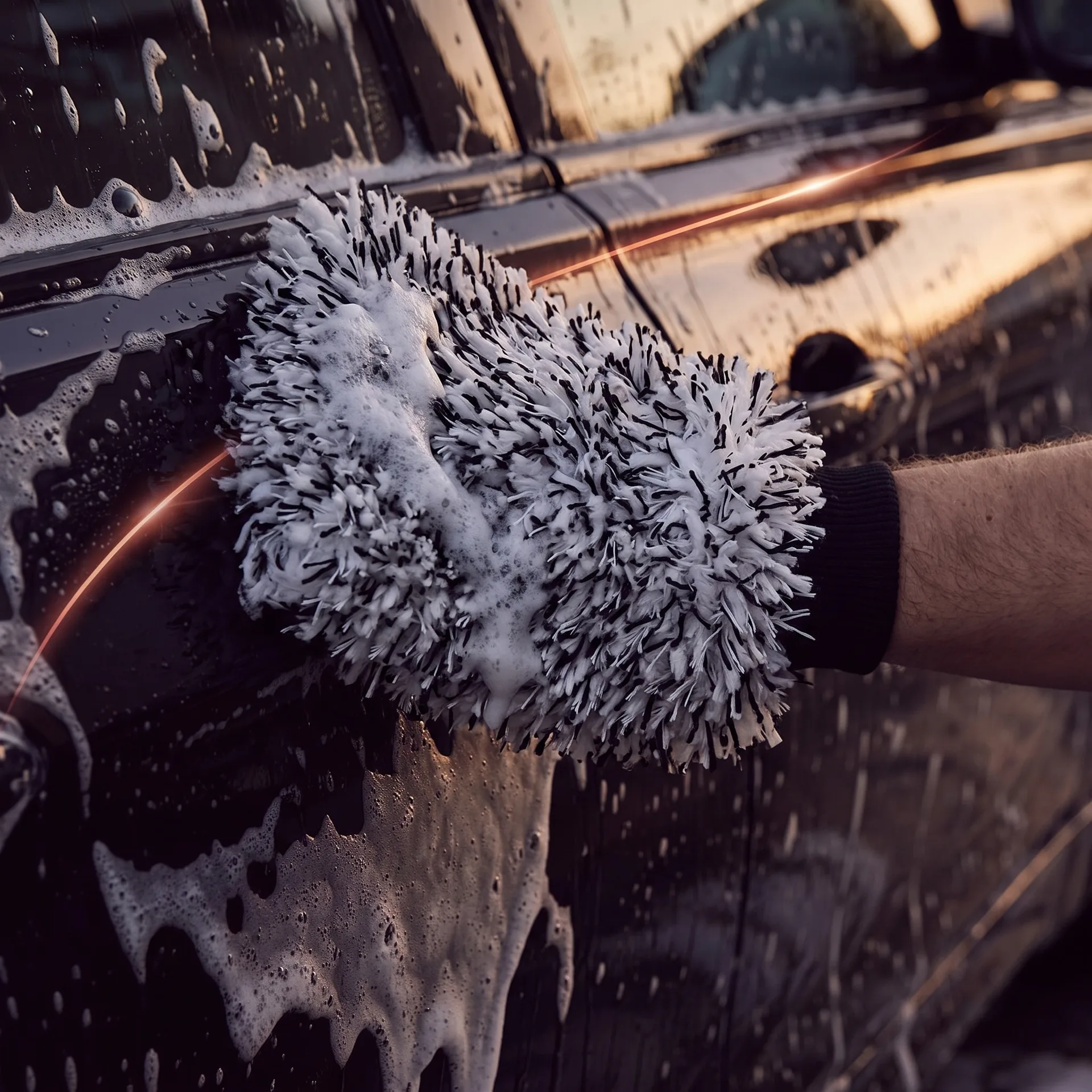
Remember that good drying cannot undo poor washing. If grit remains on the paint, the towel will drag it across the surface. Always rinse loose dirt off the car before washing, and rinse your wash mitt frequently in the bucket during the wash.
Give the car one final rinse before drying. Remove the nozzle from the hose and let the water cascade freely from the roof downwards. The water will sheet off the paint in a continuous film, leaving far fewer droplets behind. Move straight to drying without delay.
Prepare your set before turning off the tap:
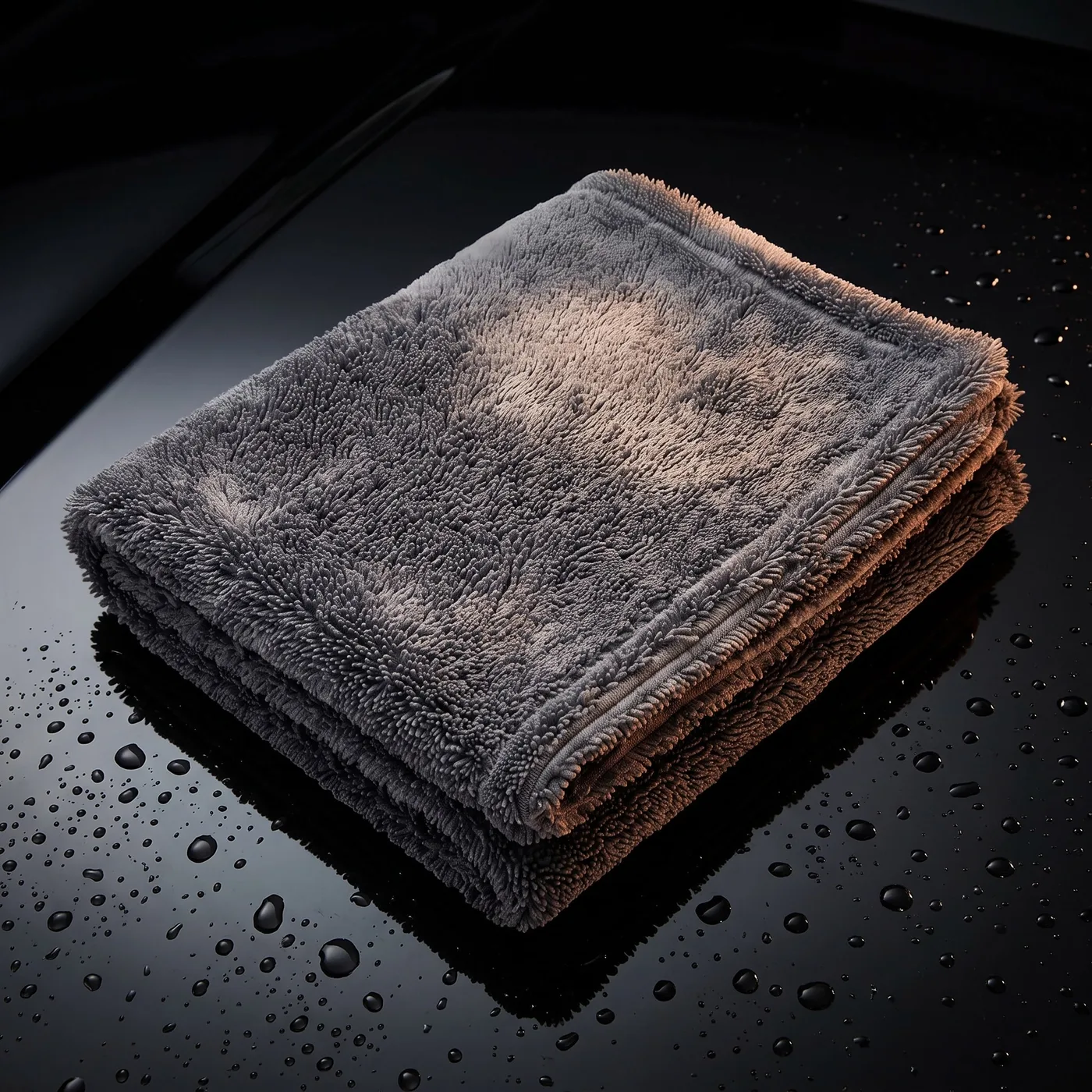
- XL car drying towel 70 × 90 cm, 1300 g/m² for the roof, bonnet and sides,
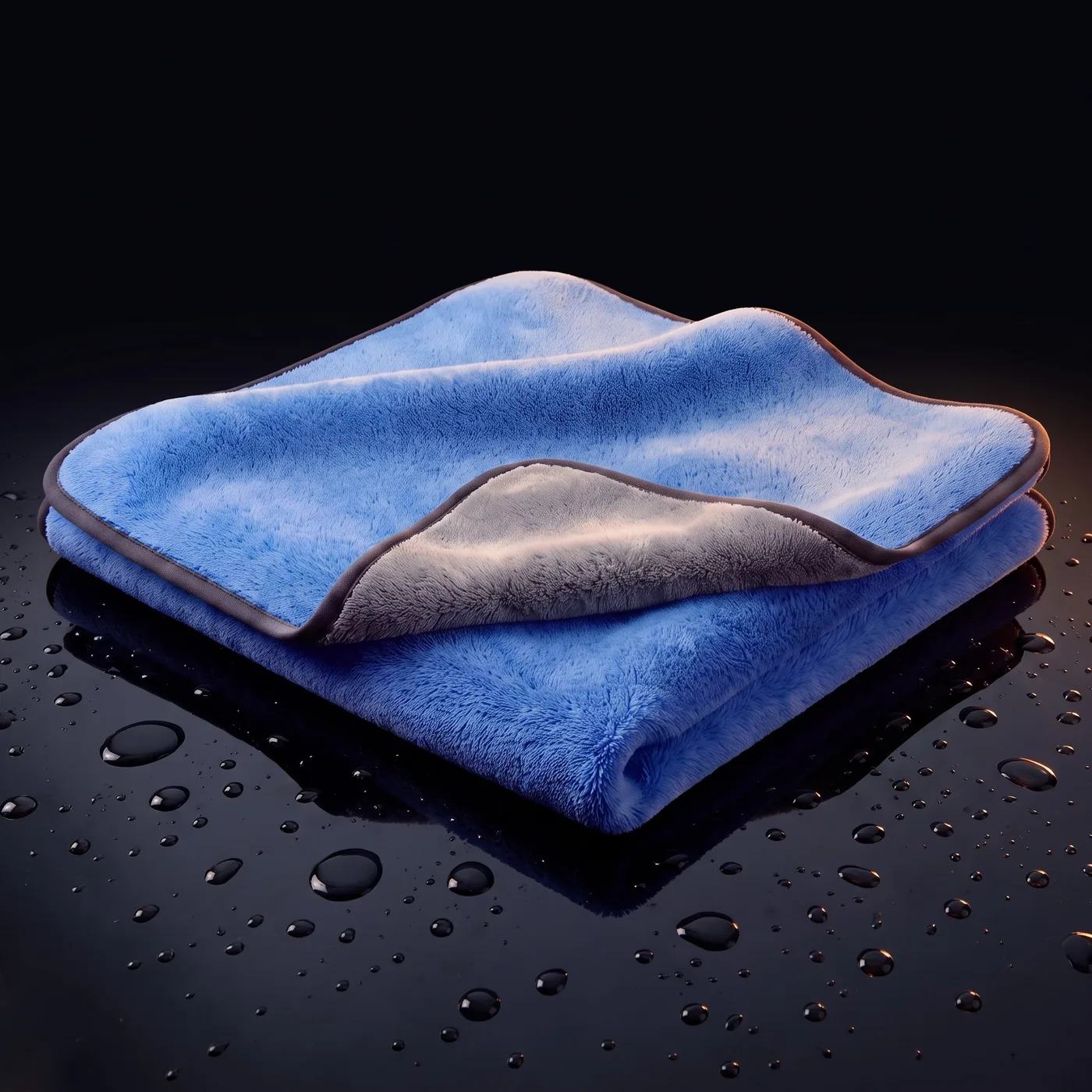
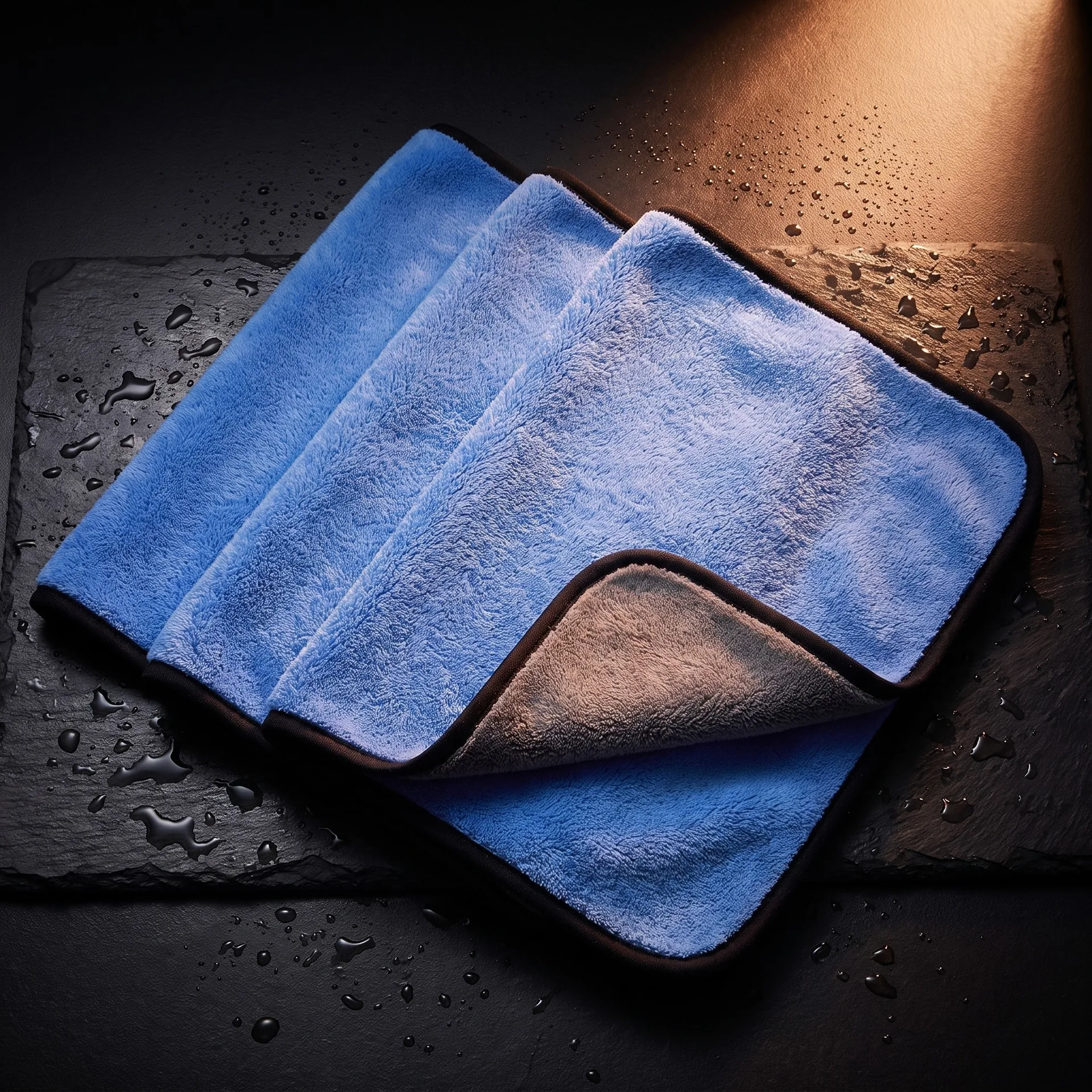
- double-sided towel 40 × 40 cm, 800 g/m² for mirrors, door jambs, wheels and other details,
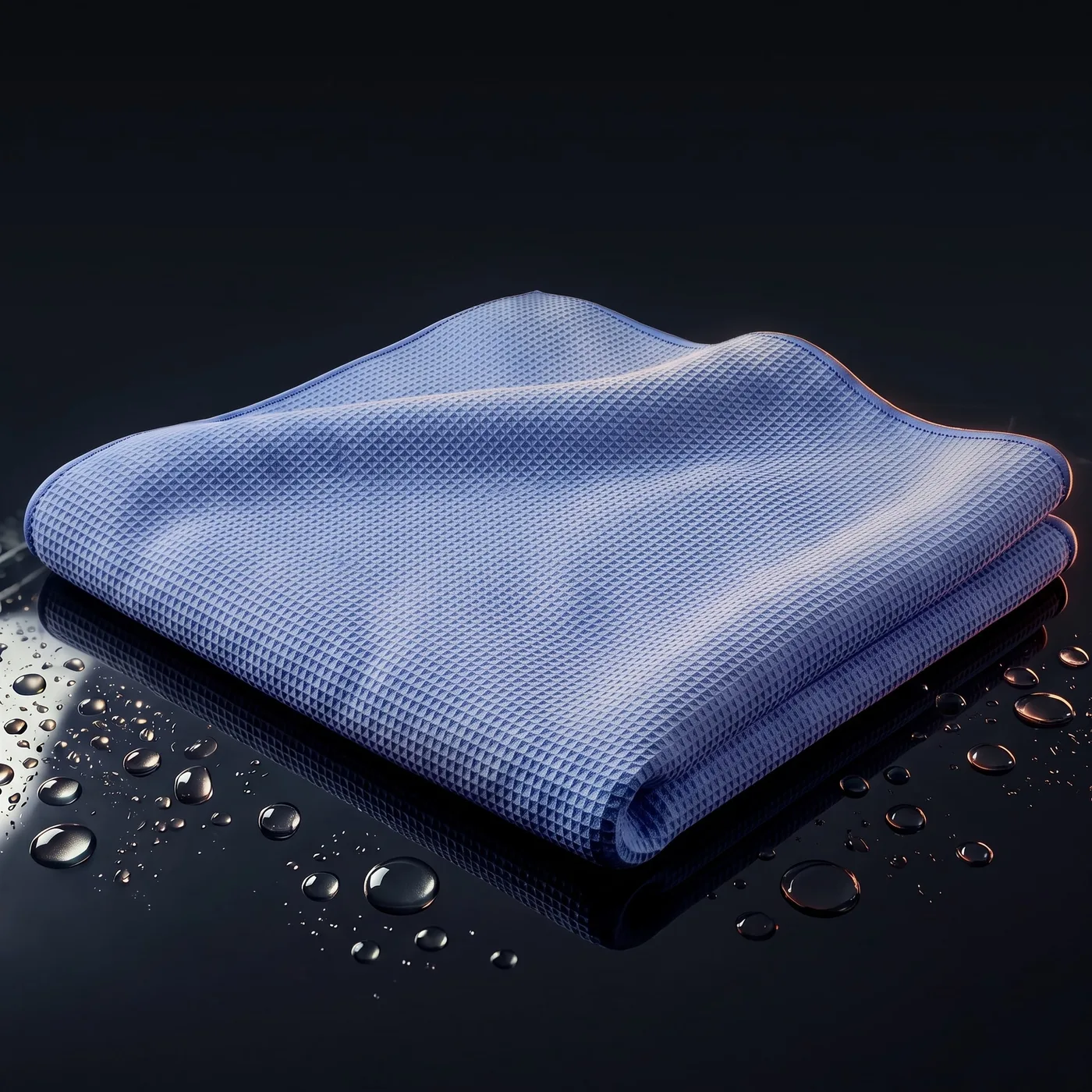
- waffle weave cloth for windows 380 g/m² strictly for glass.
Wash all three before first use. We recommend this for every cloth, as washing prepares the fibres for action and removes any production residue.
Technique: drag and pat instead of scrubbing
A common mistake is wiping a car like dishes: rapid circular motions with heavy pressure. That is how swirl marks are created, only to show up under direct sunlight. Dense microfiber requires no brute force. Its job is to absorb water, not scrub it away.
The dragging method
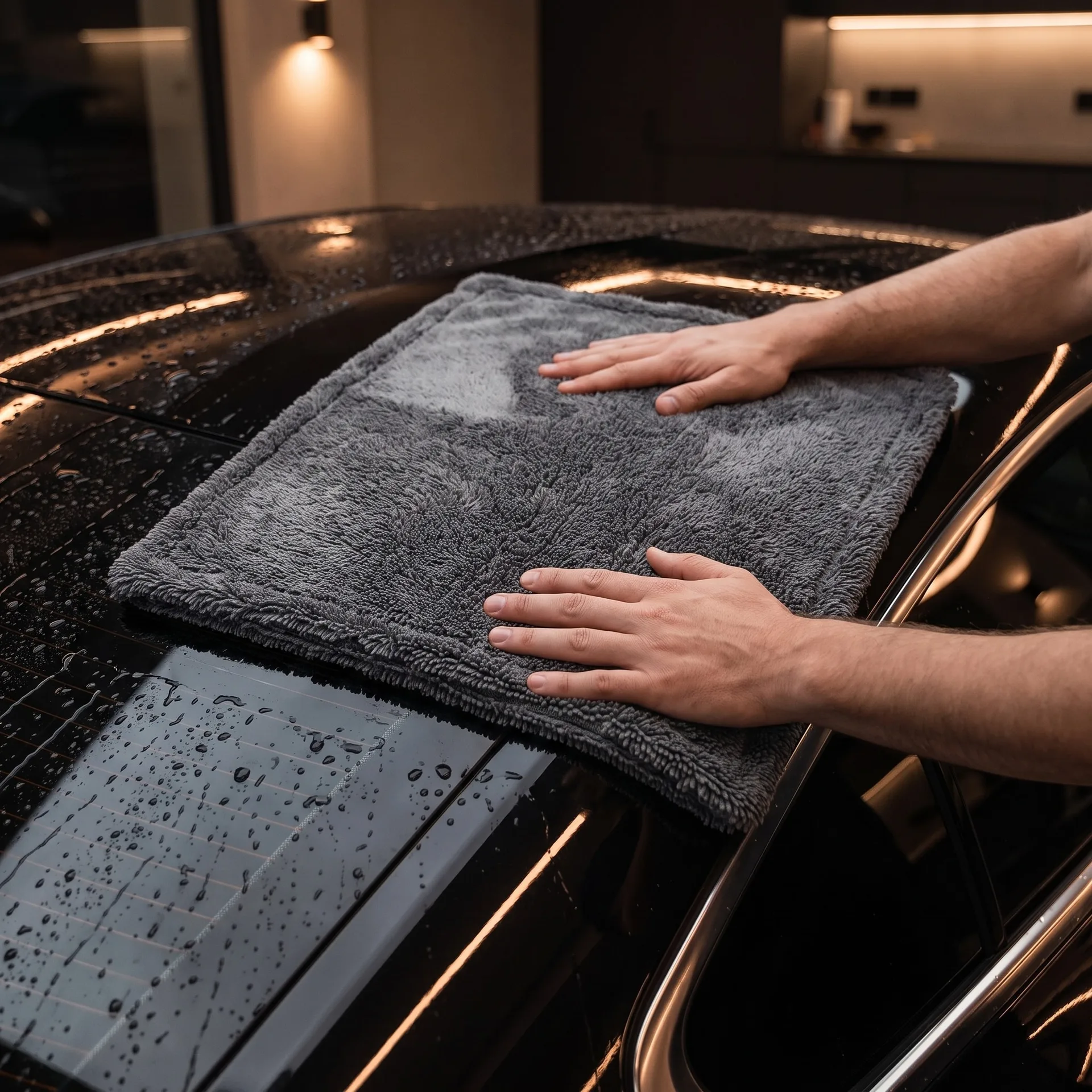
- Lay the large towel flat across the roof or bonnet.
- Hold it by the two corners facing you.
- Gently drag it towards yourself without pressing down.
- Move across by one towel width and repeat.
This method is ideal for large, flat panels. The 1300 g/m² XL towel absorbs water effectively even without added pressure, so you do not need to press it down with your hands. Its generous size allows you to dry the whole car without wringing it out.
The patting method
On doors and wings, fold the towel in half. Press it flat against the paint, hold it in place with an open palm for a moment, and move on to the next section. Catch any remaining droplets with one gentle downward sweep. Always work with a clean section of the towel, flipping it to a drier side once it becomes soaked.
Drying sequence: from the roof down to the sills
Water naturally runs downwards. If you start with the doors, water running off the roof and glass will quickly soak them again. Therefore, always dry the car from the top down, leaving the dirtiest areas until last.
- Roof - this is where most water pools before draining over the rest of the car.
- Initial glass pass - take off the bulk of the water with the large towel; fine finishing comes later.
- Bonnet and boot lid - flat panels where the dragging technique works brilliantly.
- Sides - first the upper section of the doors and wings, then the lower section.
- Lower sections - sills, bumper bottoms and around wheel arches. This is where fine road grime lingers, which is why they are dried last.
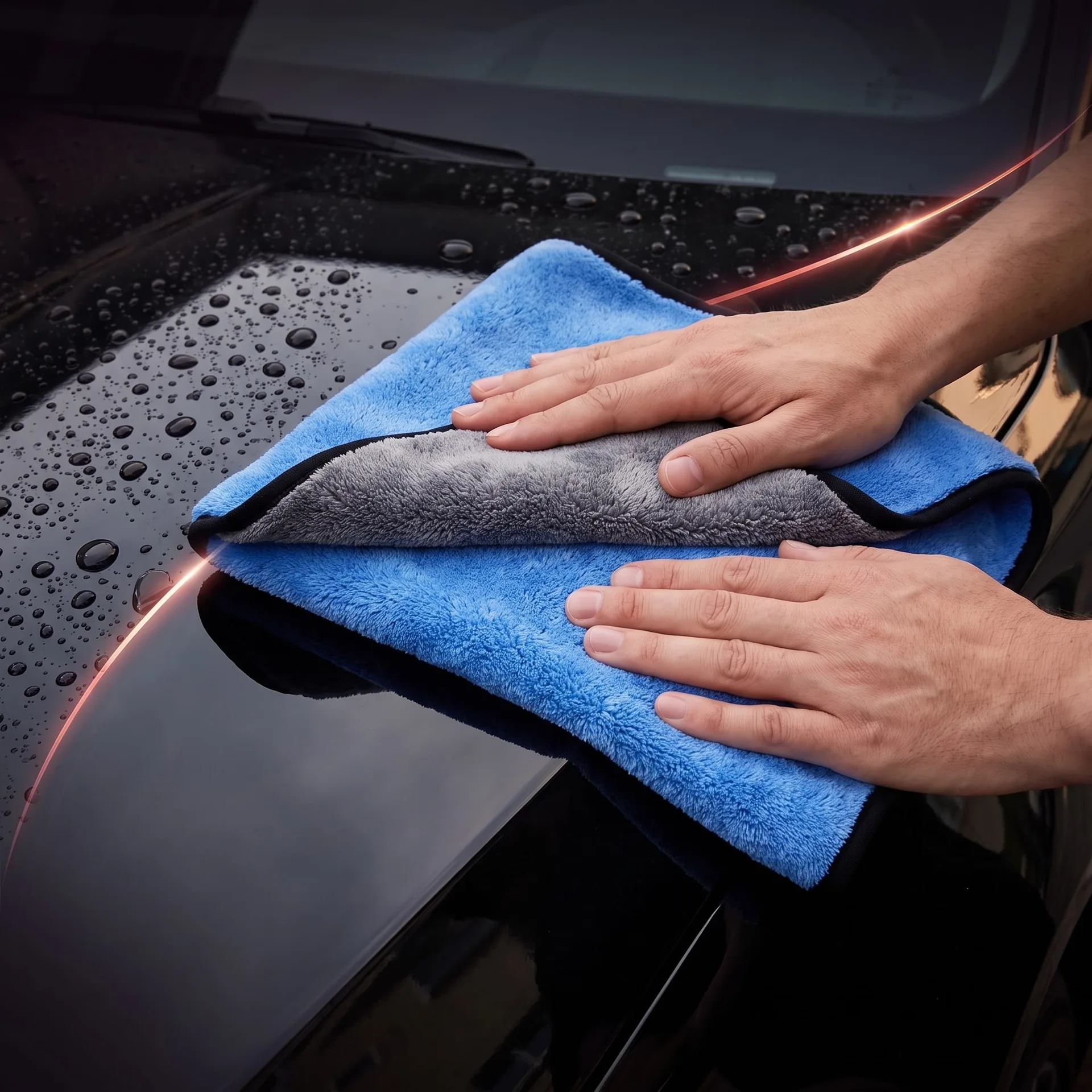
Once the main bodywork is dry, open the doors, boot lid and fuel filler flap. Water collects in jambs and around seals, soon trickling out onto freshly dried paint. The smaller double-sided 40 × 40 cm towel is much handier for these spots. Use the blue side to absorb water and the grey side to buff to a streak-free shine. Use the same technique for mirrors and smooth trim. After a few minutes, walk around the car once more. Stray droplets often seep out from beneath mirrors, mouldings and door handles; mop them up before they dry.
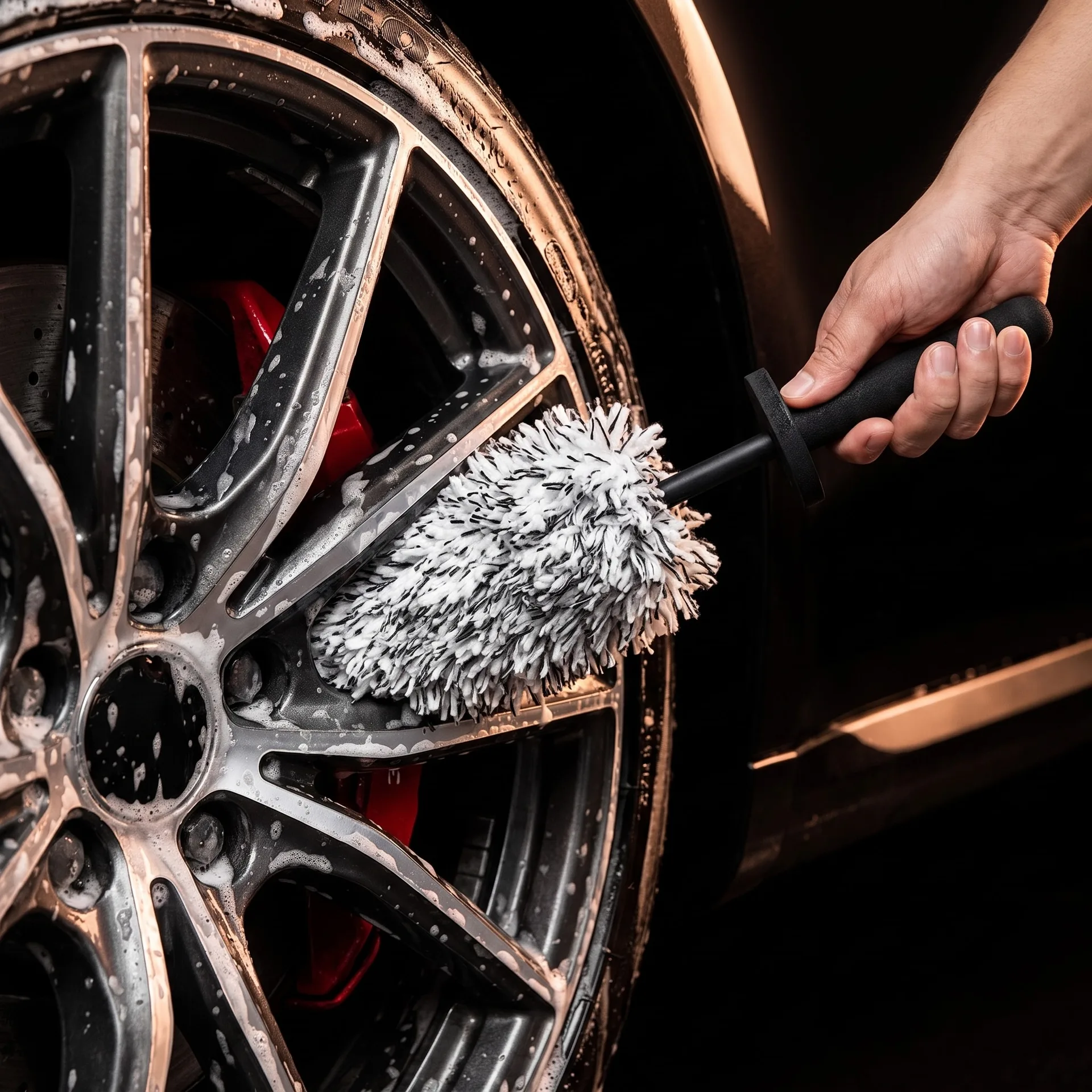
Dry the wheels last of all and do not use that towel on the paint again, as brake dust lingers on the wheels. If you have two smaller towels, dedicate one solely to wheels. To find out how to clean your wheels thoroughly before drying, check our guide on how to clean wheels: flat vs round wheel brush.
Windows and mirrors last: a dedicated cloth for glass
Glass reveals every streak. That is why you dry windows in two stages: first a rough pass alongside the bodywork, and finally a thorough finish with a dedicated cloth used only for glass. A towel that has absorbed water from the entire bodywork carries traces of shampoo and fine dirt, which instantly show up on glass as streaks.
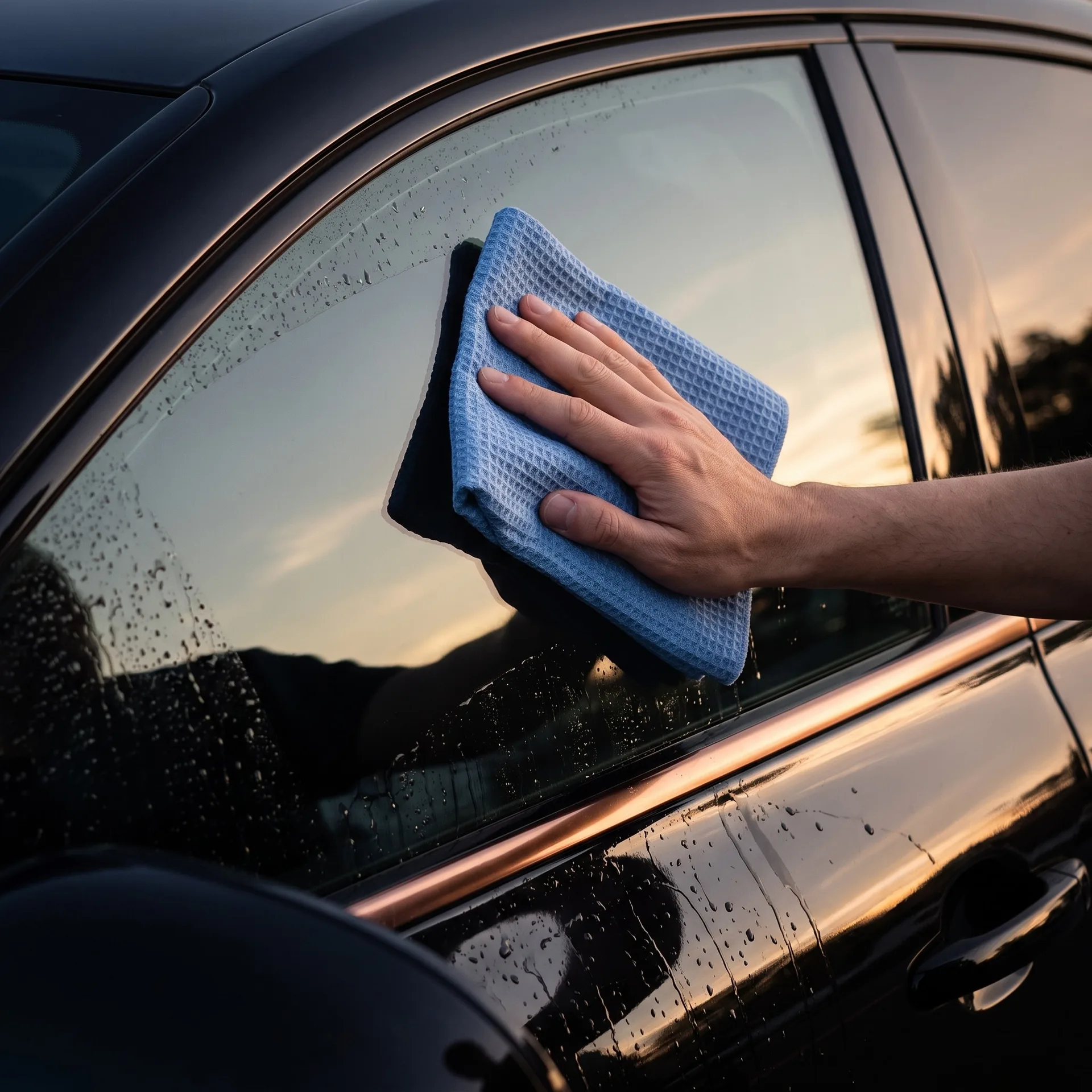
For finishing windows, we recommend a 380 g/m² waffle weave cloth. The waffle weave traps water and grime deep inside its pockets. The microfiber does not shed lint or leave stray fibres on the glass. You can use it dry or lightly misted with water. It works just as well on wing mirrors and chrome trim.
How to clean windows streak-free:
- wipe in straight lines: horizontal on the outside, vertical on the inside, so you immediately spot which side holds a streak,
- fold the cloth into quarters and flip to a fresh face as it becomes damp,
- do not forget the top edge of each side window, the part that disappears into the door when the window is lowered.
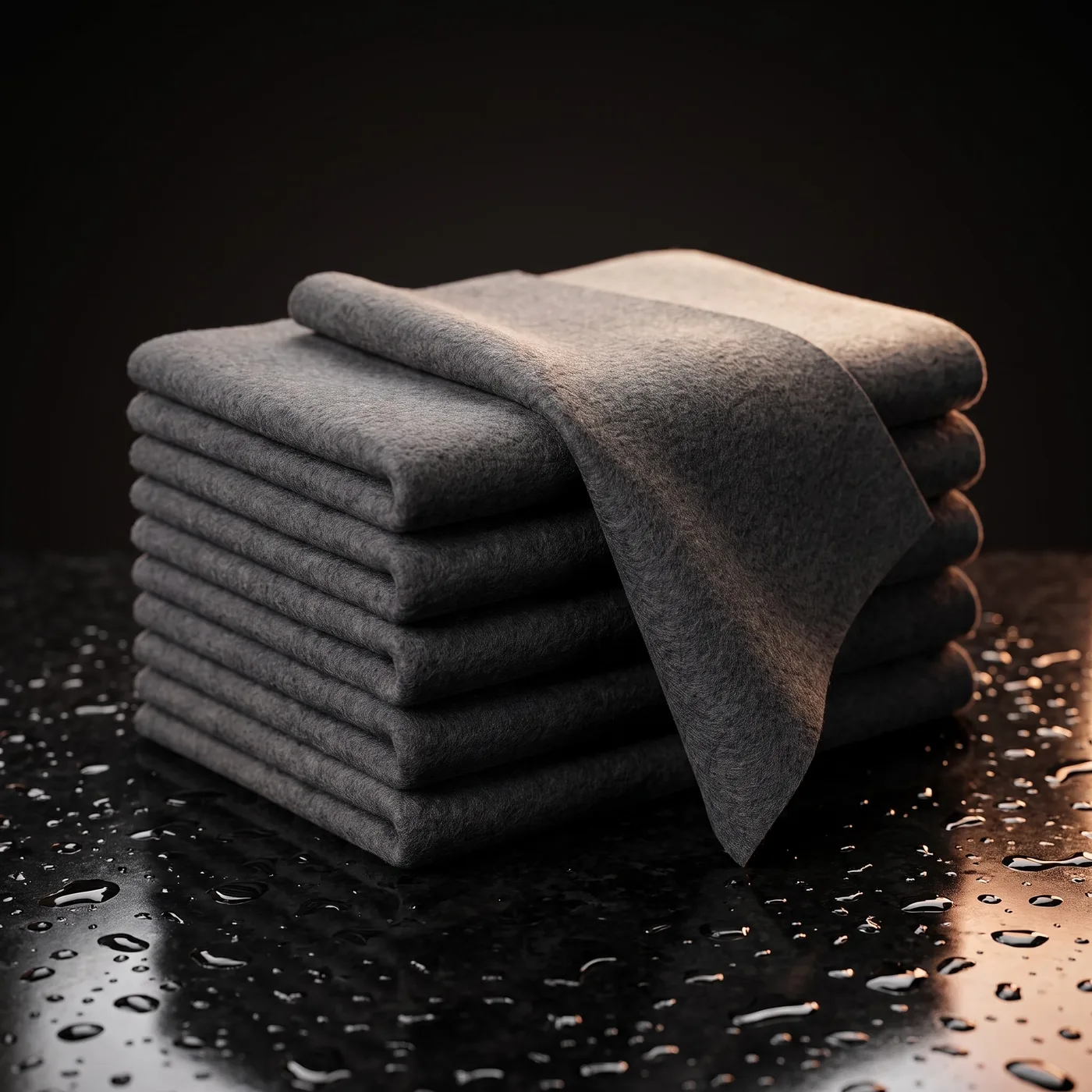
Interior glass accumulates different types of grime: dust, fingerprints and a greasy haze. For interior glass, touchscreens and the cabin, streak-free Magic cloths are ideal. Just dampen them with plain water - no detergents needed. Their edges are laser-cut, with no seams.
Mistakes to avoid and how to care for microfiber towels
Mistakes that cause streaks and scratches
- Drying in direct sunlight. Water dries faster than you can absorb it, and microfiber should never be used on scorching paint.
- Using a towel dropped on the ground. Do not shake it off and continue on the paint. Grit caught in the fibres acts like sandpaper. Place it straight in the wash and grab a fresh one.
- Heavy pressure and circular scrubbing. Let the pile do the work, not muscle power.
- One towel for everything. Paint, wheels and glass require separate tools.
- Leaving the car to air-dry. This is a surefire way to get stubborn water spots.
Washing and drying microfiber
We recommend washing your towels at 30-40°C, separately from other fabrics, using a dedicated microfiber detergent or mild liquid soap. Avoid washing powders, bleach or fabric softeners. Softeners coat the fibres, drastically reducing absorbency and causing towels to smear water. Never wash them alongside cotton either, as lint from bath towels embeds in the microfiber and ends up right on your windscreen.
Air-dry your towels. Do not tumble dry or iron them, as excessive heat can melt synthetic fibres. Store clean, dry towels in a sealed container or bag, well away from dust and grit.
Summary: drying your car in five steps
Drying your car does not take long. All it needs is care, clean towels and the right sequence. Keep these five rules in mind:
- Wash and dry in the shade on cool paint.
- Start immediately after the final rinse.
- Drag and pat the towel instead of scrubbing.
- Work from the roof down to the sills, leaving wheels and glass until last.
- Wash microfiber without fabric softener and let it air-dry.
If you are building your drying set, start with a large towel for the bodywork. Add a smaller, double-sided towel for details and a dedicated cloth for glass. You can find our complete microfiber range in our shop collection. With the right set, drying your car is quick, effortless and completely streak-free.
Frequently asked questions
We do not recommend this. Tap water contains minerals that remain on the paint and windows as water spots once evaporated. Dry the car immediately after the final rinse.
Use a clean, dense microfiber towel and glide it without pressure, dragging or patting it down instead of rubbing. If a towel drops to the ground, set it aside for washing and pick up a clean one.
An XL 70 × 90 cm, 1300 g/m² towel lets you dry the entire bodywork without wringing it out. However, for wheels we recommend a separate smaller towel, and a dedicated cloth for the glass, so you do not transfer brake dust to the paint or shampoo residue to the glass.
Usually, the culprit is the towel that previously collected water from the bodywork and carries shampoo residue along with fine dirt. Finish the glass with a separate, clean waffle weave cloth, moving in straight lines.
No. Fabric softeners, washing powders, and bleaches clog the fibres, reducing the microfiber's absorbency. Wash towels at 30-40°C using a dedicated microfiber detergent or mild liquid soap, and let them air dry.